The Hybrid AI Paradox: The Better Your Local Model Gets, the More You Still Need the Cloud

The race to replace cloud AI may be creating the strongest case for keeping it.
By Oliver Weber
Cloud Infrastructure Strategist
Last Updated: May 15, 2026
Reading Time: 12 min read
Between 2023 and 2024, the prevailing belief across the industry was that open-source models would eventually overtake proprietary models, everyone would run AI locally, and the API market would gradually lose relevance. Yet by 2026, a strange phenomenon had emerged: more and more people were buying high-end GPUs and deploying local models while continuing to pay monthly bills to OpenAI, Anthropic, and Google.
Local AI did not eliminate cloud AI. Instead, it began filtering tasks on behalf of cloud AI.
The Predictions That Never Materialized
By late 2023 and early 2024, the consensus in the technology world seemed straightforward. Open-source models were rapidly closing the gap with proprietary systems. Hardware was becoming more powerful. Quantization techniques were improving at an impressive pace. Local AI appeared poised to take over.
Many people believed the golden age of API providers was nearing its end.
What this prediction overlooked was a critical reality:
AI workloads were becoming stratified rather than consolidated.
By 2026, the situation had become much clearer. According to a survey of enterprise IT decision-makers conducted by Edge Industry Review, the dominant viewpoint among technology leaders was no longer a binary choice between local and cloud AI. Instead, the focus had shifted toward running the right model in the right place.
Interestingly, some of the most enthusiastic advocates of local AI—the developers who purchased RTX 5090 GPUs, built local RAG systems, and spent dozens of hours fine-tuning quantization settings—also became some of the most consistent cloud API customers.
This is not a contradiction.
It is a signal.
Part One: The Original Dream—One Model for Everything
To understand how we arrived here, it is worth revisiting the vision many people had in 2023 and 2024.
The logic seemed compelling.
GPUs were becoming increasingly capable. An RTX 4090 could already run a 70B-parameter model. Models were shrinking in size, with systems like Llama 3 8B capable of running on mobile-class hardware. Quantization techniques continued to advance, moving from 8-bit to 4-bit, 2-bit, and even experimental 1-bit implementations.
It seemed reasonable to assume that local AI would eventually follow a trajectory similar to personal computing, gradually replacing the need for centralized services.
Yet this vision contained an implicit assumption:
Model capability would scale linearly.
The belief was that stronger hardware combined with better optimization would eventually allow local models to reach parity with cloud-based frontier models.
That assumption turned out to be incorrect—not because local models failed to improve, but because the definition of "better" changed.
Part Two: The Unanticipated Reality—AI Workloads Are Splitting
By 2026, AI tasks had clearly divided into two distinct categories.
Layer One: Cheap, Frequent, and Tolerant Workloads
These tasks include:
- Document search
- PDF question answering
- Code completion
- Email categorization
- Local knowledge-base retrieval
They share several characteristics:
- High repetition
- Sensitivity to latency
- Frequent involvement of private data
- Low cost of occasional errors
Local models have become exceptionally effective at these tasks.
For example, a Llama 3 70B model running in 8-bit quantization on a Mac Studio M4 Ultra can summarize a ten-page PDF with quality and speed approaching GPT-4.1 in many practical scenarios.
More importantly, these tasks often involve sensitive information such as financial records, client communications, or internal documentation. Users increasingly prefer not to send such data beyond their own devices.
Layer Two: Expensive, Complex, and Reasoning-Intensive Workloads
The second category includes:
- Agentic workflows
- Long-chain reasoning
- Multi-step planning
- Enterprise-grade analysis
- High-quality content generation
These workloads have very different characteristics:
- High complexity
- Broad knowledge requirements
- Significant business impact
- High cost of mistakes
In Bedda.tech's six-month production study, Claude 3.5 Sonnet significantly outperformed local Llama-based systems on complex code refactoring tasks. Local models produced code that ran successfully without modification approximately 72% of the time, while the cloud model achieved 89%.
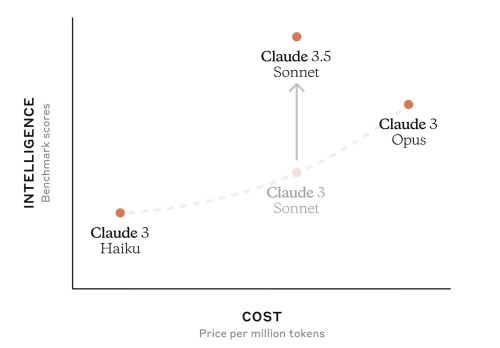
Claude 3.5 Sonnet
During one blockchain indexing architecture analysis project, Claude identified three optimization opportunities that local models completely missed. The resulting improvements saved weeks of debugging effort, making the $180 API expense trivial by comparison.
Local AI did not replace cloud AI.
It became a filter.
The workloads that continue flowing to the cloud are often the most complex, expensive, and valuable ones.
Part Three: Why Better Local Models Can Increase Cloud Usage
Imagine a developer who performs 500 simple AI queries and 20 complex reasoning tasks each day.
Previously, all 520 requests were sent to the cloud.
Now, the 500 simple requests are handled locally while only the 20 difficult tasks are routed to cloud models.
At first glance, cloud usage appears to have fallen by 96%.
However, the remaining 20 requests represent the most resource-intensive and highest-value workloads.
A more subtle shift is occurring at the economic level.
According to SitePoint's March 2026 total cost of ownership analysis, a developer using GPT-4.1 at approximately five million tokens per day incurs annual API expenses of roughly $12,600.
A locally hosted system based on a dual-RTX 5090 workstation requires approximately $6,900 in upfront investment, plus around $564 per year in electricity costs.
On paper, the hardware investment appears capable of paying for itself within 12 to 18 months.
Yet this comparison overlooks three important variables.
First: GPU Depreciation
The RTX 5090 launched with a suggested retail price of $1,999, but real-world market pricing frequently exceeded that figure by 20% to 50%.
More importantly, AI hardware evolves rapidly.
A workstation costing $7,000 today may be outperformed by a machine costing half as much eighteen months later.
Second: Maintenance Time
One self-hosting user described a situation in which an RTX 4090 experienced thermal throttling during an extreme summer heat wave.
The result was a six-hour outage that disrupted the entire team's AI workflow.
When critical tasks depend on local infrastructure, single points of failure become genuine business risks.
Third: The Cost of Human Time
This is perhaps the most underestimated factor.
Fine-tuning quantization settings, troubleshooting retrieval quality in a RAG pipeline, and resolving CUDA compatibility issues can consume many hours.
Those efforts may save only a few dollars in API fees.
For engineers billing $100 per hour or more, the economics often become unfavorable.
A Developer's Real-World Journey
Yash shared his experience on XDA Developers.
His original goal was complete local independence.
He downloaded open-source models, assembled dedicated hardware, and attempted to run everything offline.
The privacy benefits were undeniable.
However, performance limitations soon emerged.
"Smaller local models struggle with complex multi-step reasoning and large-scale coding tasks."
As he explained, he repeatedly encountered capability ceilings in daily work.
His solution was not to abandon local AI or cloud AI.
Instead, he adopted a two-tier architecture.
Local models handled all sensitive materials, including notes, client documents, and research files.
Whenever deeper reasoning capabilities were required, requests were routed to cloud models.
Crucially, the routing process became automatic.
He no longer needed to make a conscious decision every time.
This pattern is increasingly common.
At Computex 2026, Perplexity demonstrated a similar task-routing system. A lightweight local model acts as a scout, evaluating the sensitivity and complexity of incoming tasks before deciding whether they should remain on the device or be forwarded to a frontier cloud model.
The user never sees the decision being made.
Academic research is moving in the same direction.
In March 2026, researchers from the University of Pennsylvania and collaborating institutions presented the PRISM framework at AAAI. The system introduced privacy-aware routing that dynamically distributes inference workloads between cloud and edge environments, reducing latency and energy consumption to approximately 40–50% of baseline approaches while preserving privacy constraints.
Part Four: The New Economics of Hybrid AI
Understanding hybrid AI requires abandoning the idea of replacement and embracing specialization.
Cost Is No Longer One-Dimensional
Historically, AI cost discussions focused primarily on token pricing.
By 2026, decision-making involves at least four dimensions:
- Compute cost: cloud usage fees versus hardware depreciation
- Latency cost: local responsiveness versus network round trips
- Privacy cost: keeping data on-device versus transmitting it externally
- Labor cost: maintaining and optimizing local infrastructure
The relative importance of these factors varies dramatically between use cases.
Many AI enthusiasts genuinely enjoy building and optimizing their own systems.
There is nothing wrong with that.
But enjoyment and cost savings are not the same thing.
An engineer at a European health technology company once described a strict organizational rule:
Any request involving patient information must remain on local servers, regardless of cost.
Quarterly compliance reviews enforce this requirement, and violations could jeopardize contracts.
In that environment, local AI is not a cost optimization strategy.
It is a regulatory necessity.
Conversely, the CTO of a SaaS company explained that their organization attempted to migrate all AI workloads to local infrastructure.
They purchased four H200 servers, investing more than $150,000.
Three months later, they realized that electricity, cooling, networking, and specialized machine-learning operations staff had pushed total operating costs far beyond expectations.
Eventually, the company migrated complex reasoning workloads back to cloud APIs.
This is not a failure story. It is a learning story.
Companies rarely publish such experiences publicly, but these accounts appear frequently in private industry discussions.
Part Five: The Return of an Older Computing Pattern
Viewed through a historical lens, AI's evolution looks less like disruption and more like recurrence.
Mainframe era (1960s–1980s):
Terminal devices connected to centralized computing resources.
PC era (1980s–2000s):
Computation moved locally.
Cloud era (2000s–2020):
Processing returned to centralized infrastructure.
AI era (2020s onward):
Local and cloud computing coexist within hybrid architectures.
The collective actions of chip manufacturers at CES 2026 reinforced this trend.
Intel introduced the Core Ultra Series 3 platform, the first AI PC platform based on the company's 18A manufacturing process, supporting more than 200 PC designs.
Qualcomm showcased the Snapdragon X2 Plus, emphasizing distributed intelligence spanning edge devices and cloud environments.
AMD's Ryzen AI 400 series achieved 60 TOPS of local neural processing performance.
Gartner predicts that by 2029, half of all computing workloads will occur at the edge.
Although this forecast appears aggressive, it aligns well with the unique characteristics of AI inference.
However, edge computing does not mean complete localization.
A more accurate description is distributed execution.
Different portions of a single task are processed in different locations.
Part Six: Privacy Is Overtaking Cost as the Primary Driver
Many people continue to assume that local AI exists primarily to reduce expenses.
Increasingly, the evidence suggests otherwise.
Privacy Is Reshaping Decision-Making
When privacy is discussed in AI, public attention often focuses on data breaches or exposed conversations.
The deeper concern is training exposure.
Every time users submit text to a standard cloud chatbot, there is a possibility that the information contributes, directly or indirectly, to future model development.
For several categories of data, privacy considerations outweigh cost considerations entirely:
- Medical records, diagnoses, and treatment plans
- Legal documents and confidential client materials
- Proprietary source code and corporate roadmaps
- Unpublished research, patents, and experimental data
In these situations, keeping data on-device is not merely a preference.
It is a hard requirement.
An Emerging Consensus
According to reporting from PYMNTS covering CES 2026, hybrid AI architectures are increasingly becoming the practical default.
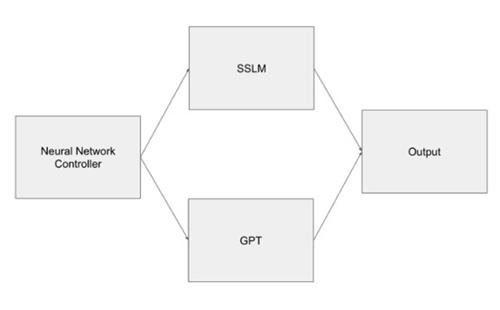
Schematic diagram of the hybrid AI architecture.
Centralized cloud systems handle model training, orchestration, and computationally intensive tasks.
Devices and edge systems handle real-time interaction and decision-making.
Perplexity's hybrid inference architecture reflects this emerging consensus.
Sensitive information such as financial records, healthcare data, and personal documents remains local.
Complex reasoning workloads are delegated to cloud infrastructure.
Future systems are likely to deepen this division of labor:
Local models will provide privacy and security. Cloud models will provide intelligence and breadth.
The two are complementary rather than competitive.
Part Seven: The Emerging Two-Brain AI Architecture
Brain #1: The Fast Brain
This layer operates locally.
Its responsibilities include:
- Millisecond-level responses
- Sensitive data processing
- High-frequency, low-cost operations
- Task filtering and routing decisions
A typical implementation might involve a heavily quantized local model running on an Intel Core Ultra or Snapdragon X2 platform.
Brain #2: The Deep Brain
This layer operates in the cloud.
Its responsibilities include:
- Complex reasoning
- Multi-step planning
- Agent workflow orchestration
- Long-context understanding exceeding 200,000 tokens
- High-quality content generation
Examples include GPT-4.1, Claude 4 Sonnet, and Gemini 2.5 Pro.
The Key Shift: From Explicit Choice to Invisible Routing
Today, users still decide whether to use Llama or GPT.
The next generation of systems aims to eliminate that decision entirely.
Users may not even know which model generated a particular response.
The hybrid reasoning architecture demonstrated by Perplexity illustrates this direction.
The system automatically decomposes large tasks into smaller components and routes each component to the most appropriate execution environment.
When the technology reaches broad deployment, it may become the first large-scale validation of task-routing as a primary AI design principle.
This is fundamentally different from today's discussions about "Llama versus GPT."
Competition is shifting away from models and toward orchestration.
Part Eight: The Mistake Many AI Enthusiasts Are Making
Across Reddit, Hacker News, and technical forums, one question remains remarkably common:
"Which model is the best?"
The question itself contains a flawed assumption.
It assumes that one model should handle every task.
A more useful question is:
Which model should handle which task?
A Practical Decision Framework
Drawing from six months of production data at Bedda.tech, the following decision matrix emerged.
Local-first scenarios:
- Teams with fewer than eight members
- Highly repetitive workloads
- Tolerance for occasional hardware outages
- Monthly API costs exceeding $800
- Strict requirements for local data processing
Cloud-first scenarios:
- Guaranteed uptime and service-level agreements are required
- Workloads depend on complex reasoning
- Large context windows are necessary
- Teams are growing rapidly
- Maximum model capability is needed during prototyping
- Infrastructure management costs outweigh potential savings
Their hybrid approach assigned approximately 80% of routine work to local agents while routing sophisticated reasoning tasks to Claude.
The result was a 75% reduction in cloud API expenses without sacrificing quality in critical decision-making workflows.
A Sign of Industry Maturity
The transition from model wars to workload allocation represents an important milestone in AI's maturation.
It mirrors the evolution of the personal computer industry.
Early debates centered on Intel versus AMD.
Eventually, the conversation shifted toward determining whether a desktop or laptop was more appropriate for a given task.
AI is undergoing a similar transition in 2026.
Conclusion
As local models become more capable, they are not eliminating cloud models.
Instead, they are allowing cloud models to focus on the most difficult, valuable, and intelligence-intensive workloads.
Local models handle filtering, preprocessing, privacy protection, and routine interactions.
Cloud models handle deep reasoning, complex planning, and high-quality generation.
The division of responsibilities is becoming clearer.
The integration between the two is becoming tighter.
Academic researchers describe this direction as privacy-aware routing.
Technology companies are turning it into products.
Enterprise IT departments are redesigning infrastructure around hybrid inference.
A Final Observation
The greatest surprise of the AI era may be this:
The race to replace the cloud has ultimately redefined why the cloud matters.
Not because local models are insufficient.
But because once local models become good enough, we finally gain a clearer understanding of which workloads truly belong in the cloud.
Those workloads are not edge cases.
They represent some of the most valuable applications of artificial intelligence.
Hybrid architectures are not a transitional phase.
They are the destination.
References
- Khan, A. (2026). Where AI Inference Will Land: The Enterprise IT Equation. Edge Industry Review.
- SitePoint. (2026). Local LLMs vs Cloud APIs: 2026 Total Cost of Ownership Analysis. SitePoint.
- Yash. (2026). Local LLMs Weren't Enough, So I Use a Two-Tier System That Keeps My Sensitive Stuff Offline. XDA Developers.
- PYMNTS. (2026). Edge AI Is Gaining on the Cloud. PYMNTS.com.
- Whitney, M. J. (2026). Local AI Agents vs Cloud APIs: Real Cost Analysis from Production. Bedda.tech.
- Riethmüller, C. (2026). Perplexity Automatically Distributes AI Computing Power Between Device and Cloud. heise online.
- Zhan, J., Shen, H., Lin, Z., & He, T. (2026). PRISM: Privacy-Aware Routing for Adaptive Cloud–Edge LLM Inference via Semantic Sketch Collaboration. Proceedings of the AAAI Conference on Artificial Intelligence, 40(33), 28150–28158.
Oliver Weber
Cloud Infrastructure Strategist
Oliver Weber writes about cloud infrastructure, platform engineering, and large-scale distributed systems. He is particularly interested in how infrastructure becomes invisible over time, turning once-complex technologies into foundational utilities that developers rarely think about.
Recommended for you