The PCIe 6.0 SSD Dilemma: Faster Than Ever, Yet Barely Noticeable for Most Users
Storage speeds have entered a strange era: benchmark records keep falling, but everyday computing feels almost unchanged. So what happened?
By Sofia Laurent
Principal Computing SystemsResearcher
Last Updated: May 16, 2026
Reading Time: 8 min read
Over the past two decades, hardware upgrades delivered improvements that were both obvious and exciting.
I still remember the first time I switched from a mechanical hard drive (HDD) to a solid-state drive (SSD). It didn't feel like an upgrade—it felt more like a form of salvation. Boot times dropped from 45 seconds to 15 seconds. Applications stopped being "click and wait three seconds" and became "click and instantly open."
The same thing happened when CPUs evolved from dual-core to eight-core processors. Suddenly, you could compress files while gaming without experiencing lag. Or when monitors jumped from 1080p to 4K, making even desktop icons appear noticeably sharper.
Back then, bigger numbers translated directly into a better user experience.
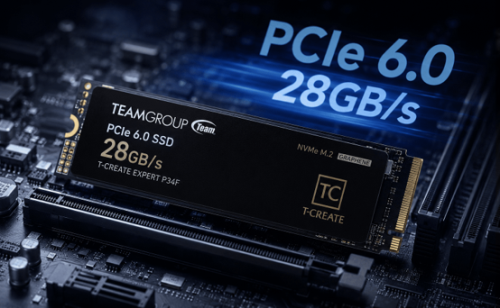
But by mid-2026, a strange phenomenon is unfolding. The storage industry is caught in a relentless race for bigger benchmark numbers. PCIe 6.0 has arrived, pushing theoretical bandwidth beyond 28GB/s. Yet when you ask someone who has just built a top-tier PC, "Does it feel faster?" the answer is often surprisingly vague:
"It's pretty good."
"Not much different, honestly."
This is not simply because users have become harder to impress. It is a sign that hardware performance growth may be decoupling from real-world application needs.
Part 1: When Storage Is No Longer the Main Pain Point
Let's rewind to the early 2000s.
Back then, storage was the bottleneck. No matter how powerful your CPU was, if your hard drive was still clicking and seeking across platters, the entire system spent its time waiting. Any storage upgrade felt transformational.
Fast forward to around 2010, and SATA SSDs sparked a revolution that users could literally see and feel. Then came NVMe, dramatically reducing latency even further.
However, a subtle turning point emerged during the transition from PCIe 4.0 to PCIe 5.0.
Last year, I ran an experiment on an aging office PC. The machine was equipped with a six-year-old Intel Core i5 and a PCIe 3.0 SSD. Without changing the CPU or motherboard, I replaced the drive with a modern PCIe 5.0 SSD running through an adapter at reduced speed.
The result?
Windows booted about 0.8 seconds faster.
Opening large Excel files dropped from three seconds to two seconds.
Yes, it was faster. But it was also the kind of improvement that would be difficult to identify in a blind test.
And that is the core issue.
For most loading operations, PCIe 3.0's 3,500 MB/s is already more than sufficient. Once data can be transferred into memory almost instantly, the bottleneck shifts elsewhere.
How quickly the CPU can process the data, how efficiently the GPU can render graphics, and how fast the network can receive cloud-based instructions become the new waiting points.
Part 2: The Great Bottleneck Migration—You're Actually Waiting for Something Else
Many people assume that "a faster SSD automatically makes the entire computer faster."
That is only true when the SSD is the primary bottleneck.
In 2026, storage has largely fallen off the list of major system limitations.
Let's look at where your time is actually being spent.
1. Gaming
You think your SSD is slowing things down?
In reality, modern AAA titles such as Black Myth: Wukong or the PC version of Grand Theft Auto VI often spend the last few seconds of a loading screen performing shader compilation.
That work belongs to the CPU and GPU.
By the time the loading bar gets stuck at 99%, the SSD has usually finished its job and is simply waiting.
When I tested Hogwarts Legacy, I artificially limited a PCIe 5.0 SSD to PCIe 3.0 speeds. The loading-time difference when entering Hogsmeade was almost negligible—roughly 1.5 seconds.
2. AI Applications
When running local large language models such as Llama 3 or GPT-SoVITS, model weights may load into VRAM quickly.
However, the actual inference process is limited by GPU compute performance and memory bandwidth.
The SSD merely brings the ingredients into the kitchen.
If the chef cooks slowly, delivering ingredients faster does not speed up the meal.
3. Everyday Productivity
Is Microsoft Teams or Zoom stuttering during meetings?
That is usually caused by network latency or CPU decoding limitations.
Does your browser slow down with 50 tabs open?
That is more likely a limitation of RAM capacity and JavaScript engine performance than storage speed.
An Interesting Failure Case
A friend of mine works in video production. Recently, he spent a substantial amount of money building a RAID 0 array using PCIe 5.0 SSDs.
Yet timeline scrubbing in Adobe Premiere Pro remained sluggish.
His first assumption was that the storage was still not fast enough.
After extensive troubleshooting, the real culprit turned out to be a transition plugin suffering from a memory leak.
Hardware upgrades cannot fix software bugs.
PCIe 6.0 is solving problems from ten years ago, while today's users are facing entirely different ones.
Part 3: The Industry's Incentives vs. The User's Benefits
If most people do not need PCIe 6.0, why are manufacturers pushing it so aggressively?
The answer lies within the supply chain.
This is not primarily about making "My Computer" open faster.
According to TrendForce data and presentations shown at CFMS 2026, this arms race is being driven by three major forces.
1. AI Data Center Demand
This is the most legitimate use case.
When AI training clusters load petabyte-scale datasets, doubling storage bandwidth can significantly reduce GPU idle time.
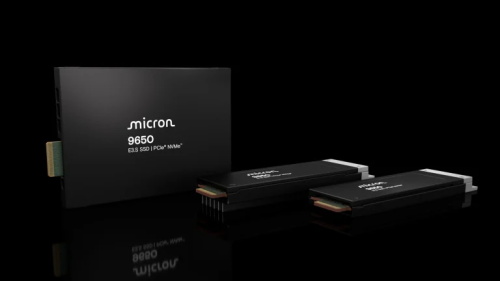
Enterprise-grade PCIe 6.0 SSDs such as the Micron 9650 and Samsung PM1763 are explicitly designed for AI infrastructure.
Their priority is maximum throughput, not consumer-focused latency improvements.
2. NAND Manufacturers Need Growth and Margins
NAND suppliers such as Micron, Samsung, and SK Hynix must continually advance flash density, layer counts, and performance levels in order to absorb production capacity.
If everyone remained satisfied with PCIe 3.0 SSDs, who would buy the latest NAND generations?
How would vendors justify premium pricing?
PCIe 6.0 provides a fresh performance label that supports higher margins.
3. Ecosystem Lock-In
Motherboard manufacturers need new selling points to encourage hardware upgrades.
If a B650 motherboard remains perfectly adequate for another five years, how do vendors sell new Z-series chipsets, ATX 3.0 power supplies, and next-generation platforms?
A Realistic Industry Prediction
Although Forward Insights forecasts PCIe 6.0 entering the market in 2026, companies such as Kioxia have suggested that widespread adoption may not arrive until 2028.
That reveals something important:
Even industry insiders understand that today's PCIe 6.0 products are as much about technological demonstration as they are about actual market demand.
Part 4: The Visible Cost—Heat and Power Consumption
PCIe 5.0 already has a widely recognized problem:
Heat.
I tested an early PCIe 5.0 SSD based on the Phison E26 controller.
During large file transfers, temperatures climbed to 85°C, triggering thermal throttling.
Manufacturers responded with increasingly elaborate cooling solutions:
Massive heatsinks.
Heat pipes.
Small cooling fans.
Even M.2 slots positioned to borrow airflow from graphics cards.
PCIe 6.0 is likely to make this challenge even worse.
The reason lies deep within the underlying technology.
To move from PCIe 5.0's 32 GT/s to PCIe 6.0's 64 GT/s, the industry had to transition from NRZ signaling to PAM4 (Pulse Amplitude Modulation with Four Levels).
A simple analogy:
Previously, a courier delivered one package per trip. The process was straightforward and relatively error-resistant.
Now, the courier attempts to carry two packages simultaneously in order to double efficiency.
Throughput increases, but signal integrity becomes much harder to maintain and mistakes become more likely.
To correct these errors, controllers require significantly more advanced Forward Error Correction (FEC) mechanisms.
This leads to:
- More complex circuitry
- Higher power consumption
- Increased heat generation
Current indications suggest that without active cooling—or specialized thermal designs such as Samsung's liquid-cooling-optimized 9.5mm enterprise form factor—consumer PCIe 6.0 SSDs may begin throttling after only tens of seconds of sustained maximum-speed operation.
This creates a somewhat ironic situation.
The drive may be capable of reaching 28GB/s.
But it may only sustain that speed for 30 seconds before thermal limits force performance back toward PCIe 4.0 territory.
If so, how valuable is that momentary burst of extreme speed to the average consumer?
(Credit Micron)
Part 5: Who Actually Needs 28GB/s?
Users Who Can Genuinely Benefit
- Data science and AI training
Loading hundreds of gigabytes of vector databases and model weights means time is literally money.
- 8K and higher RAW video production
When video streams exceed 4,000 MB/s, PCIe 5.0 becomes the minimum requirement and PCIe 6.0 becomes the comfortable operating zone.
- High-performance computing
Frequent checkpoint writing and intensive swap activity can meaningfully benefit from extreme storage bandwidth.
Users Who Gain Very Little
- Gamers
Modern games continue to rely heavily on random reads, especially 4K QD1 workloads. Improvements in this area have been far smaller over the past five years than increases in sequential throughput.
If PCIe 6.0 controllers are aggressively optimized for benchmark-leading sequential performance, they may repeat some of the mistakes seen in early PCIe 5.0 drives.
In extreme cases, loading times may remain unchanged—or even worsen because of thermal management behavior.
- Office workers and web users
Pure overkill.
- People upgrading older platforms
Unless you are replacing the entire system, the benefits are minimal.
Conclusion: Perhaps We Have Been Focusing on the Wrong Metric
PCIe 6.0 may not be a failed upgrade.
It may simply be a signal.
For decades, hardware was constantly chasing software. New software always demanded more performance than existing hardware could comfortably provide.
That created a clear need for faster components.
Today, at least in the storage market—and arguably in computing more broadly—hardware performance in certain areas has raced ahead of software requirements and user behavior.
The industry is entering a new phase:
From invisible improvements to even more invisible improvements.
The next major battleground may not be who can achieve the highest sequential read and write numbers.
Instead, the competition may revolve around:
1. Energy Efficiency
Who can maintain high performance for longer periods within strict power and thermal limits?
2. The Deep End of Random Performance
Who can reduce low-queue-depth latency to levels approaching DRAM?
3. Genuine Software Integration
When will Windows and macOS stop treating SSDs as if they were still hard drives?
When will games fully leverage technologies such as DirectStorage and finally bypass decades of legacy loading logic?
Those questions may ultimately matter far more than whether the next SSD can reach 28GB/s or 35GB/s.
References & Sources
- PCMag: Micron Launches First PCIe 6.0 SSDs, But Good Luck Trying Them Out (February 2026)
- XDA Developers: PCIe 6.0 Runs the Risk of Being Too Hot for Gaming PCs (February 2025)
- Micron Official Blog: AI Is Making Demands, Micron's G9 NAND SSDs Deliver (August 2025)
- Forward Insights Enterprise Research Reports: Enterprise PCIe SSD Generational Transition Data (2024)
- TrendForce: Enterprise SSD Vendor Revenue Rankings for Q2 2025 (August 2025)
- CFMS 2026 / Yesky: Samsung Showcases a 16-Channel PCIe 6.0 SSD (April 2026)
- XDA Developers: 5 Reasons PCIe 6.0 SSDs Are Utterly Pointless (February 2025)
Sofia Laurent
Principal Computing Systems Researcher
Sofia Laurent specializes in personal computing systems and user-facing hardware technologies. Her research focuses on the intersection of performance, efficiency, and product design, with particular interest in how engineering decisions translate into real-world user experiences.
Recommended for you