The First BCI Victory Belongs to the Catheter Lab, Not the Operating Room
Why Synchron's deployment strategy may matter more than Neuralink's bandwidth
By Elena Kovacs
Emerging Technology Correspondent
Last Updated: June 1, 2026
Reading Time: 14 min read
Before 2024, the questions people most often asked about brain-computer interfaces were straightforward:
How many electrodes does it have?
How strong is the signal?
How fast can it move a cursor?
By 2026, however, the questions shaping the industry's future have changed:
Which hospitals can perform the procedure?
Which physicians have been trained?
Which insurance companies are willing to reimburse it?
Brain-computer interfaces have not stopped being a neuroscience problem. But they are increasingly becoming a healthcare-system problem.
This is not a regression. It is the rite of passage that every technology must go through when moving from the laboratory to the patient's bedside.
1. Neuralink's Invisible Ceiling
Neuralink's N1 implant contains 1,024 electrodes capable of recording the firing activity of individual neurons. From a neuroscience perspective, it represents the highest-bandwidth brain-computer interface ever deployed in humans.
Its PRIME study has accumulated more than 15,000 hours of device usage data. Participants have demonstrated the ability to control a cursor and type using thought alone, achieving speeds of 13.7 words per minute with accuracy exceeding 92%.
Yet these numbers obscure a more fundamental issue: Neuralink is not merely building a better device—it is building an entirely new layer of medical infrastructure.
The procedure requires a specialized surgical robot known as R1. The robot creates a coin-sized opening in the skull and inserts ultrafine polymer threads, thinner than a human hair, into the motor cortex with extreme precision. The operation requires neurosurgeons, general anesthesia, and an entirely new training ecosystem. After surgery, patients require hospitalization and ongoing follow-up supported by dedicated neuroengineering teams.
In other words, Neuralink's expansion strategy resembles building the cathedral before spreading the religion.
This creates a bottleneck that remains widely underestimated. By the end of 2025, Neuralink's PRIME study had implanted 21 participants globally, but growth is increasingly constrained by infrastructure. The number of deployed R1 robots, the training pipeline for neurosurgeons, and the surgical capacity of each clinical site collectively form a ceiling that may be tighter than any technological limitation.
History offers a strikingly similar precedent. The Da Vinci surgical robot received FDA approval in 2000, yet it took until 2020 for global installations to surpass 5,000 units. The system undoubtedly offered greater precision and less invasive procedures, but hospitals had to purchase robots costing roughly $2 million, surgeons needed hundreds of hours of simulation training, and operating rooms required extensive reconfiguration. These sources of friction proved far more influential than technical specifications in determining adoption rates.
The challenge facing Neuralink is not whether the technology is advanced. The challenge is determining how advanced it must be before a hospital decides it is worth purchasing an entirely new system.
That is fundamentally a hospital-management question, not an engineering question.
An even deeper issue concerns economics. Even if a hospital is willing to invest, can it recover the cost? Neuralink has reportedly targeted an R1 robot price below $250,000, but that represents only the hardware expense. Surgical training, dedicated operating-room modifications, and the creation of neuroengineering support teams often generate costs that exceed the device itself.
Within the fee-for-service structure of the U.S. healthcare system, hospitals must demonstrate that such investments will generate sufficient patient volume and revenue. Yet the primary indications for BCIs—ALS and high-level spinal cord injuries—are relatively rare conditions. A single hospital's patient pool may be insufficient to sustain a dedicated BCI program.
This suggests that Neuralink's commercialization path may ultimately require a new healthcare delivery model. Rather than hospitals purchasing systems, Neuralink may need to build and operate its own network of surgical centers.
But that introduces another question: does a technology company possess the capability—or the desire—to operate a nationwide medical procedure network?
That challenge lies well beyond the traditional competencies of most technology firms.
2. Synchron Is Hitchhiking
Synchron's Stentrode contains only 16 electrodes, and its signal resolution is far below that of Neuralink's N1.
Yet it possesses one advantage that Neuralink cannot match: it does not require opening the skull.
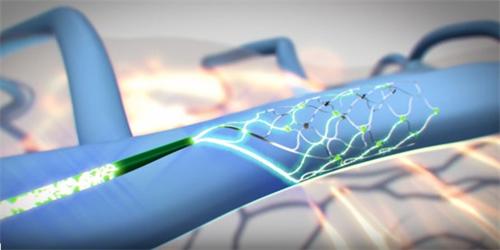
Visualization of Stentrode Implantation Catheter Delivery in Cerebral Venous Sinus (Credit: Synchron)
The Stentrode is delivered through the jugular vein in the neck and guided via catheter into the superior sagittal sinus, a large blood vessel that runs adjacent to the motor cortex. Once deployed, the stent-like electrode array expands against the vessel wall and records neural activity transmitted through the vascular tissue.
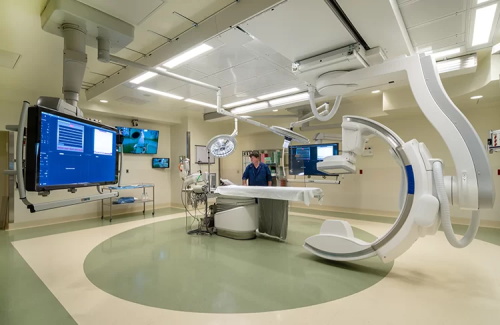
The entire procedure takes place in a cardiovascular catheterization lab, performed by interventional specialists using equipment that hospitals already own. The operation typically takes 20 to 30 minutes, can often be completed under conscious sedation, and patients are usually discharged within one or two days.
Synchron did not build new infrastructure.
It borrowed the infrastructure already created for cardiovascular intervention.
There are tens of thousands of interventional neurologists, neurointerventionalists, and interventional radiologists worldwide who perform similar catheter-based procedures every day. Catheterization laboratories are standard facilities in major hospitals.
Synchron does not need to persuade hospitals to purchase a new robot.
It only needs to persuade physicians to advance the catheter a few inches farther.
The brilliance of this "hitchhiking" strategy lies in how it changes the risk profile. Instead of introducing a neurosurgical-grade procedure, it reframes BCI implantation as a cardiovascular-style intervention.
The latter is a workflow hospitals already understand, insurers already reimburse, and physicians are already trained to perform.
The SWiTCH study, published in JAMA Neurology, reported zero device-related serious adverse events during twelve months of follow-up. This is not necessarily because Stentrode is a more advanced technology. It is because the procedure itself leverages a vascular-intervention framework that has been refined and validated over decades.
Synchron CEO Thomas Oxley once summarized the company's philosophy in a sentence that deserves a place in every medical technology entrepreneur's notebook:
"We're not trying to build the best BCI. We're trying to build a BCI that actually gets implanted."
This is not modesty.
It is a clear-eyed understanding of how medical technologies spread.
Technology history is filled with similar examples. USB was not the most advanced data-transfer protocol of its era, but it worked with everything, so it won. TCP/IP was not the most elegant networking architecture, but it could run over existing telephone infrastructure, so it won. Wi-Fi was not the longest-range wireless technology, but it required no rewiring, so it won. Web applications were not the highest-performance software model, but they required no installation, so they won.
These victories share a common pattern.
What they reduced was not the technical barrier.
What they reduced was deployment friction.
Synchron is also working to remove friction in another way. In August 2025, the company partnered with Apple to allow Stentrode signals to directly control iPads and Vision Pro devices through Apple's BCI Human Interface Device protocol.
This is not about building better hardware.
It is about building a better plug.
The goal is to allow BCIs to integrate seamlessly into existing consumer-electronics ecosystems.
When a patient can control a familiar iPad using thought alone, the learning curve approaches zero.
At its core, this strategy does not ask users to adapt to new technology.
It asks the technology to adapt to users' existing habits.
3. Who Pays?
The medical-device industry operates under a brutal reality:
FDA approval is necessary, but it is not sufficient.
What ultimately determines whether a technology becomes commercially viable is the payment system behind it.
As of 2026, the U.S. Centers for Medicare & Medicaid Services (CMS) has not issued a coverage determination for any implantable brain-computer interface. There is no established CPT code and no Medicare reimbursement pathway.
This means that even if Synchron completes its pivotal FDA trial and receives PMA approval in 2026, patients may still be forced to pay out of pocket.
The combined cost of an invasive BCI system—including the device, implantation procedure, and long-term support—could easily exceed $50,000 to $100,000.
Synchron has been working with CMS to establish a Category I CPT code, a process that is lengthy and uncertain.
Neuralink has not yet begun publicly engaging in similar reimbursement discussions.
In 2025, the U.S. Government Accountability Office (GAO) released a report noting communication challenges between CMS and BCI developers and recommended that CMS designate a single point of contact to coordinate reimbursement evaluations for emerging neurotechnology.
The report did not provide a definitive solution.
But it sent a clear signal:
Reimbursement pathways—not regulatory approvals—are becoming the primary constraint on large-scale BCI commercialization in the United States.
One precedent deserves attention, though it also illustrates the complexity of the issue.
In February 2026, Neurolutions' IpsiHand became the first BCI-related product to receive a CMS HCPCS Level II code (E0738).
Yet there is an important distinction.
IpsiHand is a non-invasive EEG-based headset used for stroke rehabilitation and classified as durable medical equipment (DME).
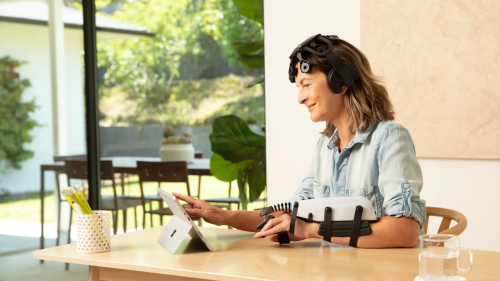
IpsiHand non-invasive EEG-based headset
The reimbursement logic for implantable communication-oriented BCIs is entirely different. Such systems involve surgery, implanted hardware, and long-term neuroengineering support. There is no existing DME framework that can simply be reused.
An even subtler issue is that reimbursement policies may shape the very form BCIs ultimately take.
If reimbursement standards focus on communication assistance, Synchron's iPad-control pathway gains a significant advantage.
If reimbursement standards prioritize motor-function restoration, rehabilitation-oriented systems such as NEO's robotic-assistive approach may become more attractive.
Payment systems do not merely determine who enters the market.
They also define what the market is expected to become.
In China, events are unfolding at a different pace.
In March 2026, Boruikang's NEO system received approval from China's National Medical Products Administration (NMPA), becoming the world's first commercially approved invasive BCI system.
Two months later, China introduced official pricing guidance for invasive BCI procedures, and some provinces began incorporating them into reimbursement frameworks.
NEO's positioning is particularly noteworthy.
It was not approved as a neural interface for controlling computers through thought.
Instead, it was approved as a motor-function assistance system designed to drive pneumatic rehabilitation gloves.
This positioning allowed it to bypass some of the most complex regulatory pathways associated with communication-focused neural interfaces and enter an already established rehabilitation-device framework.
The distinction is strategic rather than technical.
In the United States, BCI developers often need to prove that patients can compose emails using thought alone.
In China, NEO primarily needs to demonstrate that patients can perform grasping exercises through a brain-controlled rehabilitation glove.
The latter produces clinical endpoints that are easier to quantify and easier for healthcare payers to evaluate.
In a 2026 analysis, InsideBCI summarized the situation with a simple observation:
"The reimbursement pathway—not regulatory approval—is now the binding constraint on BCI commercial scale in the United States."
The implication is clear.
Synchron may win FDA approval.
But if it fails to win CMS reimbursement, what it wins may amount to little more than an expensive clinical trial qualification.
4. Three Regulatory Ecosystems, Three Destinations
If one focuses exclusively on the United States, a simple narrative emerges:
Synchron appears closer to commercialization because it is safer and easier to deploy.
But this narrative overlooks a critical reality.
The industry may not have a single destination.
In the United States, the combination of FDA oversight and CMS reimbursement policy is shaping BCIs around communication and assistive technology.
Stentrode enables individuals with paralysis to control computers, send messages, and operate smart-home systems.
Its destination is restoring access to the digital world.
The value proposition is straightforward: it addresses one of the most devastating consequences of severe neurological disease—the loss of communication.
For a patient with ALS who can no longer speak, the ability to send a message to a family member through thought alone carries a value that is difficult to quantify.
Yet this model depends on a significant assumption.
Patients and payers must be willing to spend substantial sums for communication freedom.
Whether that assumption holds remains uncertain.
Eye-tracking systems and speech-generating devices already provide partial communication capabilities at a fraction of the cost. BCIs must demonstrate enough additional value to justify price tags ranging from $50,000 to $100,000.
In China, the regulatory ecosystem formed by the NMPA and the National Healthcare Security Administration (NHSA) is shaping BCIs around motor rehabilitation.
The goal of NEO is not to help patients control an iPad.
The goal is to help patients retrain grasping movements through brain-controlled rehabilitation gloves and promote neurological recovery through neuroplasticity.
Its clinical endpoint is rooted in rehabilitation medicine rather than human-computer interaction.
This approach offers a practical advantage.
Rehabilitation outcomes can be measured using standardized functional assessment scales, making reimbursement decisions easier for healthcare systems.
Moreover, rehabilitation services are typically paid for by public insurance systems rather than directly by patients, potentially creating a larger addressable market while also limiting margins.
Europe presents yet another model.
Synchron received CE Mark certification in 2022, but reimbursement policies vary significantly across countries.
Germany may offer relatively generous support for rehabilitation technologies.
The United Kingdom's NHS may take a more cautious approach.
France may apply an entirely different assessment framework.
As a result, CE Mark provides market access, but it does not guarantee large-scale deployment in any individual country.
These three regulatory ecosystems—FDA/CMS, NMPA/NHSA, and CE certification combined with national reimbursement systems—are evolving in parallel.
Each is independently defining what a BCI should do and what a BCI should be worth.
They are not necessarily competing for the same destination.
They may be inventing entirely different destinations.
Public information regarding NEO remains limited.
It should not be framed as a "Chinese Neuralink"—a narrative that has become increasingly common in English-language technology media despite lacking meaningful supporting evidence.
A more accurate interpretation is to treat NEO as a case study demonstrating how a different regulatory logic can bring BCIs to market in an entirely different form.
5. Engineering Breakthroughs Are Giving Way to System Breakthroughs
Around 2020, the most exciting developments in the BCI field involved advances in decoding algorithms, higher electrode densities, and ever-increasing bandwidth.
The industry's central question was simple:
Can we actually read neural activity?
By 2026, that question is no longer the only one that matters.
The industry has begun confronting a different set of challenges:
Which hospitals can deploy the technology?
Which physicians can be trained?
Which insurers are willing to pay?
Which regulators are willing to establish long-term reimbursement pathways?
This does not mean engineers have lost influence.
It means innovation has entered a new phase.
Artificial intelligence experienced a similar transition.
During the 2010s, the most important questions revolved around model architectures and training capabilities.
By the 2020s, many companies discovered that training a model was often easier than deploying it reliably in production environments.
Quantum computing has followed a comparable trajectory.
Early attention focused on qubit counts.
Later, the industry realized that error correction, cryogenic systems, engineering reliability, and cost control would be equally important in determining commercialization timelines.
Brain-computer interfaces are undergoing the same shift.
The most important breakthrough over the next several years may not emerge from a laboratory paper.
It may not come from a company demonstrating higher neural bandwidth.
Instead, it may come from a hospital deciding to integrate BCIs into standard clinical workflows.
It may come from a new reimbursement code.
It may come from a surgical approach that allows ordinary interventional physicians—not specialized neurosurgeons—to perform implantation procedures.
Viewed through this lens, Neuralink, Synchron, and NEO are not entirely competing for the same destination.
Neuralink is betting on higher-performance neural interfaces.
Synchron is betting on a lower-friction path of medical adoption.
Several Chinese projects are betting on the co-evolution of rehabilitation systems and reimbursement systems.
They are solving different problems.
They may ultimately serve different patient populations.
For that reason, the catheter-lab approach may indeed win the first battle of bringing BCIs into healthcare systems.
But that does not mean it will win the final battle.
Medical history repeatedly demonstrates the same pattern.
First-generation products prove that a technology can enter hospitals.
Second-generation products expand indications.
Third-generation products ultimately define the industry.
Today's Synchron looks more like the first type of product.
Neuralink may be competing for the second stage.
And the product that ultimately defines the age of brain-computer interfaces may not yet exist.
Most technological revolutions follow a similar trajectory.
Competition inside laboratories is measured by performance.
Competition in the real world is measured by systems.
Once a technology begins leaving the laboratory, the unit of competition is often no longer the device itself.
It becomes the entire ecosystem.
For brain-computer interfaces, the first victory may indeed belong to the catheter lab.
But the final victory will belong to whichever system proves most compatible with reality.
Some data and analysis referenced in this article draw from the JAMA Neurology SWiTCH study (2023), the U.S. Government Accountability Office (GAO) report (2025), NextWavesInsight BCI Trials analysis (2026), InsideBCI reimbursement pathway research (2026), and Neurolutions CMS announcements (2026).
Elena Kovacs
Emerging Technology Correspondent
Elena Kovacs focuses on frontier technologies whose commercial impact remains uncertain but potentially transformative. Her work examines where scientific breakthroughs meet engineering constraints, regulation, and economic reality.
Recommended for you